Saturday, 10 August 2013

Sakari is back, and not before time.

It seems like an age since Sakari Oramo was announced as the next Chief Conductor of the BBC Symphony Orchestra. In fact, it was only back in February 2012. My impatience to see/hear him take up his new position, which commences in the 2013/14 season, has been tamed by his recent appearance at the First Night of the BBC Proms this year with the orchestra. It was an impressive showing and offered an intriguing preview into what we might expect from this formidable partnership in the years to come.

My enthusiasm for the understated Finnish conductor has only grown since his tenure in my home city of Birmingham. My first visit to Symphony Hall as a teenager happened to be to one of Sir Simon Rattle's last concerts with the City of Birmingham Symphony Orchestra. As such, I did not witness the orchestra's oft-trumpeted transformation at his hands. After becoming hooked on concert-going (no surprise given the splendid local hall and fine orchestras performing there) I was fortunate to observe how the sound of the orchestra evolved under Oramo's leadership.

It is true that following in Rattle's footsteps would never be easy but I seem to remember that Oramo was welcomed quickly and warmly by local audiences. His experience as a violinist helped him and the orchestra to develop their string sound in particular. This influence is still keenly felt to this day, under the present incumbent. Oramo also endeared himself by frequently addressing the audience over the PA system, despite his spoken English not being entirely perfect. This is something that Andris Nelsons has been feted for but he is evidently not the first here to have done so.

Oramo's Birmingham Sibelius cycle: an underrated classic
Oramo developed a reputation for excellence not just in Scandinavian repertoire but also in English music, well known and otherwise. His work with Elgar's music has earned him a medal from the Elgar Society. He presided over a gargantuan Stravinsky cycle and recorded one of the finest Sibelius cycles I have heard. There was nothing flashy about his style or performances and this, perhaps, explains why audience numbers during his tenure in Birmingham dipped to middling levels. It is my feeling that he was not liked by all orchestra members and that he was under-appreciated by local audiences. This is, however, my own perception and probably not the whole story.

I was particularly intrigued when Oramo began to experiment with seating the CBSO violins antiphonally in some of his later concerts. I remember a very good Mahler 2 towards the end of his tenure in which this arrangement was employed. It also brought to mind Rattle's own experimentation towards the end of his own stint there. The orchestra very rarely employs this layout these days; only under the baton of more enlightened conductors. This is most frustrating when the programmes often feature two juxtaposed photographs of the modern-day orchestra, sporting violins together, with the orchestra under one of its earliest conductors, Sir Adrian Boult, with the violins very much divided. It's all terribly disingenuous.

Since leaving Birmingham, Oramo has worked with a number of different orchestras. His principal position has been Chief Conductor of the Royal Stockholm Philharmonic Orchestra, with which he has made a number of very successful recordings. His Schumann symphony cycle is, to my ears, one of the very best digital full orchestra versions available - no mean feat given that excellence in 'core' repertoire is so elusive among the younger generation of conductors. It is splendidly recorded and there are, as one might expect in these more enlightened times, no concerns regarding any 'difficulties' with Schumann's orchestration. A recent Elgar 2 is also well worth a listen. All of these recordings benefit from antiphonal violins, Oramo's now-preferred orchestral layout.

Sakari Oramo with the Royal Stockholm Philharmonic Orchestra in his favoured 'Monteux' layout

I was delighted to see that he has imported this layout (incidentally the 'Monteux' layout with, left to right, 1st violins, violas, celli/basses, 2nd violins) to the BBC Symphony Orchestra, which his First Night concert confirmed. The layout for this concert is significant as the programme featured contemporary, modern and Romantic works. Clearly, Oramo perceives modern and contemporary works, quite rightly, as no barrier to antiphonal violins. As I have argued before, there are surely very few composers who have written their music specifically for the 'violins together' layout and so why should antiphonal violins (with all the aural benefits they bring) not be employed more universally? I am currently listening to a fascinating new recording of Seppo Pohjola's first and second symphonies, performed by the Finnish Radio Symphony Orchestra under Oramo, in which the violins are divided to good effect and no detriment. The same goes for a recent recording of Prokofiev's fifth symphony with the same forces.

I feel sure that the use of this layout, at least, will help to inject some much needed personality into the sound of the BBC Symphony Orchestra, which is undoubtedly a great orchestra. Like many of its BBC, and indeed British, colleagues it needs particularly inspired leadership to develop a distinctive sound. That is to say, whilst an orchestra can be very good, brilliant even, it can still be wanting in personality. I look on, hopefully, at my local orchestra with this sentiment in mind.

Exciting times lie ahead then, hopefully, at the BBC Symphony Orchestra. So, welcome back Sakari, and I hope to see you conducting in Birmingham again soon!

@musicdirektor


Sunday, 10 February 2013

Lovely DVDs worthy of your attention

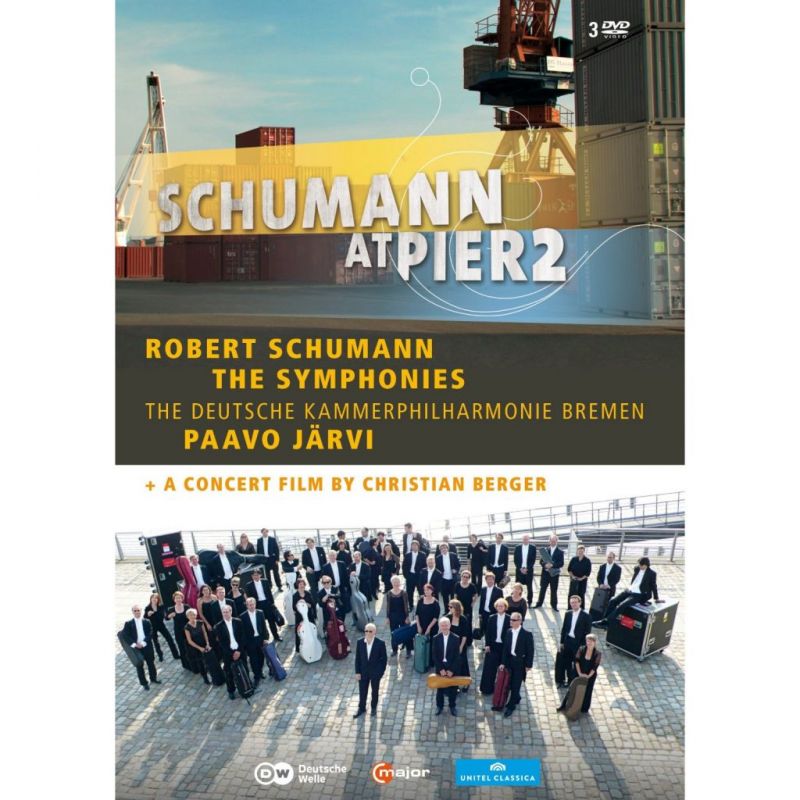
Just a short blog to share my thoughts on two wonderful recent DVD releases that have a few attributes in common. Both feature conductors and players passionate about the music they are playing (and it shows!), both feature behind the scenes documentary sequences that offer real insight and both, er, feature antiphonal violins.

First up is Schumann at Pier2, which features performances by the Deutsche Kammerphilharmonie Bremen, one of my favourite chamber orchestras, and their music director, Paavo Jarvi. The film documentaries their project of taking the four symphonies of Robert Schumann and performing them at a warehouse that is mainly used for exhibitions and rock concerts. Pier2 turns out to be an ideal concert space and an informal one, too, with the front-most audience members sitting in sofas.

I was a little disappointed at first that the DVD did not feature complete performances of the symphonies (I will seek out the CD releases). It does, however, follow the symphonies in chronological order. The concert performances are interspersed with footage of Jarvi (clearly a passionate advocate of Schumann) talking about the composer, rehearsals and, most interestingly, sequences of individual players (or combinations of them) talking about their parts and playing them. These played parts are very cleverly segued into the concert performances and offer a fascinating insight into Schumann's writing. As if further evidence were needed that Schumann was not a poor orchestrator then it can be found here. Though, I have to say, Jarvi does make the odd alteration to Schumann's parts. But such is the commitment in these performances that I can forgive this.

Highly recommended, particularly if you want to see passionate and democratic music-making in action.

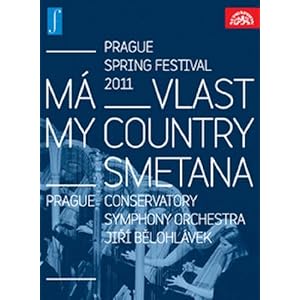
Next, we have a performance of Smetana's Ma Vlast, performed live at the Prague Spring Festival in 2011 by the Prague Conservatory Symphony Orchestra and conducted by Jiri Belohlavek. This masterwork is performed at the opening of the festival each year by different orchestras. Memorably, it was performed by the Czech Philharmonic Orchestra and conducted by Czech exile, Rafael Kubelik, in 1990. Kubelik was a co-founder of the festival in 1946 but he defected in 1948 when the Iron Curtain came down.

Belohlavek is a fine conductor and is revered much more in his native Czech Republic than here in the UK, where he was chief conductor of the BBC Symphony Orchestra until last year. He made the BBCSO into a very fine sounding ensemble but his lucid and serious technique was clearly not what the classical music industry were interested in here. They tend to prefer more frantic podium antics, these days.

Anyway, in the accompanying documentary the conservatory musicians were clearly delighted to have had the opportunity to play for Belohlavek and their admiration is obvious both from what they say and how they play. The film also highlights the incredible amount of behind the scenes work that goes into organising such an event, including the intensive courses that the young musicians go through.

The performance itself is a very fine one. It has the essence of an 'event' as tends to be inherent in concerts such as this featuring young musicians after such preparation. The playing is of a very high standard. The string sound is not as refined as in the classier established ensembles but then these musicians are unlikely to have the more expensive instruments that their professional colleagues have, not to mention the years of experience in corporate 'blending'. There are occasional wind intonation issues, which would be expected when using quadruple wind forces (anyone who has tried to tune four flutes will empathise). These are minor quibbles, however. The ensemble and passion are things of wonder here, particularly the opening bars featuring no less than five harps playing more or less in unison. I wonder how much rehearsal time that took?!

A heartwarming experience, then, and a cracking performance. This group displays their enthusiasm for music and nationalistic fervour without the need for coloured jackets and twirling double basses!

Thursday, 27 September 2012

A Tale of Two Tchaikovskys and One City


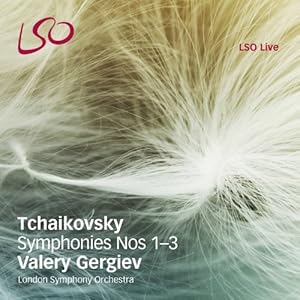
If you are a lover of Tchaikovsky's orchestral music then you are spoilt for choice with some of the recent releases on disc. The two that have featured most on my musical radar seem to have been well co-ordinated in their release timings. One combines Tchaikovsky's fourth and fifth symphonies while the other features his rather less well-known first, second and third symphonies. The curious thing is that these discs have been released at the same time by two of London's 'rival' orchestras, the LPO and the LSO, respectively.


Let me tell you, you will not regret purchasing either of them. In fact, I would go as far as suggesting that they are essential listening for those who think they know their Tchaikovsky symphonies. I do not imagine for a moment that the two orchestras communicated about the timing of the release of these discs but the fact that there is no overlap allows us to enjoy these highly distinctive readings without direct comparison.


Since my 'thing' is orchestral sound, it is interesting to note the difference between the recorded sound of these two wonderful orchestras. Clearly, neither orchestra records in halls noted for their acoustic brilliance. Nevertheless, the engineers recording in the Barbican and Royal Festival Halls have become adept at making the most of them. The two conductors here have cultivated very different orchestral soundworlds from their respective orchestras. 


The LPO under Jurowski have a more realistic 'concert hall' sound on their disc with a better overall balance. They have a wonderfully dark and 'chilly' sound that better suits the darker, later symphonies. The LPO brass are clearly very good but they are never spotlit in the recordings for the sake of it in these works where many a conductor has been content to simply let these sections rip in order to get the most thrills. The string sound is fine but relatively lean sounding, which actually makes the most tricky of figurations sound like very little effort indeed was required to execute them. One of the secrets to the success of these readings is Jurowski's intelligent musicality in somehow making every line of counterpoint heard. So often one hears important string lines in these works come to the fore and simply disappear, which curtails the wonderful musical logic contained within.

Gergiev's LSO have a less distinctly 'Russian' sound and we hear a much 'fatter' string sound. How different an orchestra they are to that which we hear in those discs from the 'golden years' of the 60s and 70s when audiences were treated to Tchaikovsky symphony cycles under, say, Dorati and Markevich. The virtuosity remains, of course, but the string sound is muscular and very much 'Central European'. We have much to thank Sir Colin Davis for in that respect. May he get well soon. This full sound helps to add weight and credibility to these works that lie somewhere on the scale between masterpiece and jolly good romp. I tend towards thinking of the former, particularly in the case of the first symphony. Besides, it's about time that these earlier pieces had the 'luxury' treatment! 

Common to both these orchestras is their orchestral layout with antiphonal violins and powerhouse double bass sections underpinning everything from the centre of the orchestral picture.

The word 'lugubrious' sprung to mind when I was listening to the readings of the first three symphonies. When I heard the radio broadcast of the first symphony I remember feeling that the slow movement was taken far too slowly. On hearing it on disc it sounds quite right - perhaps they went for the other take! Whatever one feels about the tempo, we are given time to really enjoy the lovely string sound (close up and vivid in the Barbican) and the hauntingly beautiful wind solos - lovingly indulged here. The real climax of the whole piece is to be found in this movement and it is given to the finest effect I have heard on disc. Goose pimples are guaranteed as the horns blast away the lonely melody above tremolando strings. I wondered if the horns may have been spotlit in the recording until I realised that the rest of the orchestra was being held back until finally letting rip moments later. Just try it! The finale really is terribly exciting and the 'liveness' is fully evident. Like Jurowski in his earlier release of this symphony, Gergiev takes Tchaikovsky's tempo markings quite literally in the transition from the andante to the main allegro, even if this seems to jar the flow a little. It is something I have become accustomed to.

If the second and third symphonies seem less remarkable it is not because of any lack of commitment on the orchestra's and conductor's part. They are highly enjoyable but, ultimately, less inspired works. Nevertheless, they demand to be known. What is interesting about this reading of the third is that it was recorded while the orchestra were on tour in the Tonhalle, Zurich. So, a rare chance to hear an LSO Live recording outside of the confines of the concrete Barbican!

I have never made a secret of my loyalties when it comes to British orchestras. The LSO has always been my favourite. However, if I had to choose between these wonderful discs I would have to opt for the one by my second favourite London orchestra, the LPO. Perhaps it is because I love the darker fourth and fifth symphonies more than Tchaikovsky's earlier ones. Still, I have heard plenty of uninspiring readings of these works. Jurowski is surely one of the most intelligent and interesting of today's more famous young conductors and he engages with these works with unflinching intensity. That is not to say that there is any over-emoting, there is plenty enough anxt and emotion in these works without the need to point these up. 

My earlier point about counterpoint is an important one in these readings. Every line is heard, giving these highly contrapuntal works a sense of remorseless intensity and tragedy. Jurowski does not hold back, either, in terms of tempo. The tempi in the fifth symphony, in particular, are swifter than I have heard for quite some time. There are no happy endings to be found in these readings either. After a lithe and exciting final movement, the final three chords are ground out in a broader tempo suggesting quite the opposite of a victory. Jurowski suggested that he found more darkness in these works than others have when he was discussing them around the radio broadcasts. That Jurowski imbues these works with such a tragic intensity is no surprise given that he has also gifted us one of the most exciting renditions of Mahler's 'Resurrection' symphony ever on disc.

The reading of the fourth symphony is probably the most successful of all those discussed so far. The tempo of the first movement is just 'right'. It is in no hurry and yet never feels laboured. The second movement is definitely forward moving but with wonderfully musical phrasing, particularly in the opening plangent oboe solo. The relaxed tempo of the scherzo again feels just right when so many conductors feel the need to see just how far they can push their string players in the pizzicato perpetuo! The finale positively whizzes by and leaves the virtuosity of this fabulous orchestra beyond any doubt. There is no victory to be found at the close here, either, which is fine by me.

Wednesday, 30 May 2012

On orchestral sound and warhorse concerti

This post, I suppose, follows on from my previous one, in which I tried to explain why I feel so strongly about the seating of violins in orchestras. However, I need not labour that point any further. In this post, I wish to explore further how orchestral sound has changed in modern times and why we, as listeners, should care.

As I write, I am listening to a new recording of the Tchaikovsky and Mendelssohn violin concerti, performed by Ray Chen and accompanied by the Swedish Radio Symphony Orchestra under Daniel Harding. Not long into the Tchaikovsky I realised that, whenever I listen to new concerto recordings or performances, I am far more interested in the orchestral accompaniment than the soloist's contribution. Given that I am a conductor, I don't suppose many will find this to be a surprise. I tend to find that if a soloist is particularly special then my attention can be prized away from the accompaniment to their star turn, whether they are serving the music at hand or detracting from it.
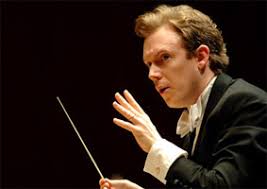
Daniel Harding (courtesy of www.danielharding.com)
This disc is very good, I should add. However, I am most impressed in this case by the orchestra and conductor. The jury seems still to be out in the critical press about Daniel Harding but I have always been impressed by him both on disc and in the concert hall. He seems to be one of the wunderkinds who sensibly withdrew from the initial limelight to go and brush up their skills with 'lesser names' in Europe, such as the Bremen Kammerphilharmonie and now the Swedish RSO. My impression is that he takes great care over orchestral sound: dividing his violins is de rigeur for him, bass sound is full but lithe, mid (viola!) sounds are ever present, string articulation and phrasing in Romantic repertoire is punchy yet cultured, timpani sticks are generally on the hard side and woodwind contributions have personality. All of this adds up to my preferred sort of orchestral sound. 

Now, some of these things are relatively easy to achieve as a conductor (eg. seating plans, timp heads/sticks) and others will take much more time and skill and will, of course, depend on the orchestra both in terms of their 'usual' corporate sound and the individual players. Some of these things will require the conductor to be a very good communicator of their vision as not all orchestral musicians conceive the totality of what their orchestra sounds like. Why should they? However, the conductor can at least reassure him- or herself that they have an important role to play in this regard.

The Problem of Orchestral Homogeneity

Commentators often bemoan the fact that orchestras sound much more similar today than they did, say, fifty years ago. I do not disagree with this. Nevertheless, I can still play 'guess the orchestra' when listening to Radio 3 with some success. Many of the great orchestras still have traces, to lesser or greater degrees, of their 20th century personalities. I am going to pin the blame for the apparent trend towards homogeneity of sound on one Herbert von Karajan. This is an oversimplification, of course, but here's why:

Firstly, I should declare that, whilst I do own several recordings by Karajan that I treasure, on the whole I tend to steer clear of buying them. That is largely because I dislike the conception of orchestral sound that he cultivated, particularly in his later years. He was a most prolific recording artist and the 70s and 80s were choc full of recordings from him and the Berliners. His idea of 'perfect' orchestral sound seemed to be this homogeneous, blended sonority. Sure, the 'phwum' of the BPO sound is truly a wonder of nature but, on disc at least, it is often terribly opaque.
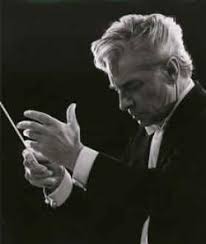
Herbert von Karajan - a conductor who knew what sound he wanted and how to achieve it.
As Karajan and the BPO became recording artists par excellence, so others began to emulate this idea of the 'perfect' orchestral sound. Other orchestras that were prolific on disc in the 80s, such as the CBSO and Oslo Philharmonic, fell into this trap of homogeneity and, whilst many of their recordings are exciting for other reasons, the orchestral sound is bland and uninteresting - devoid of personality. These ensembles have only in more recent times begun to redress this situation. It may be that the recording engineers, venues and/or early digital sound did them few favours, of course. In fact, most recordings from this era document the journey of many orchestras into homogeneity of sound.

The Berlin sound is still rather opaque on disc (EMI do their best, I'm sure, to work miracles with the acoustic of the Philharmonie). Combine this with the fact that I have never really been a Rattle admirer and the result is that I am uninspired with many of their recent releases. However, I am very impressed with their Digital Concert Hall, which allows everyone with a decent internet connection to see and hear many of their concerts past and present. For all that I have said about their sound, they are truly a force of nature and a joy to behold as musicians (not many orchestras will feature as many smiling and visibly 'feeling' musicians as this!).

I do not perceive the BPO to have the quintessential 'German' sound; that is, dark and warm string sonority and fruity woodwind (particularly clarinets) contributions. For this, I rely on the still-distinctive Leipzig Gewandhaus Orchestra and Dresden Staatskapelle, amongst others. Riccardo Chailly, who conducts the former, is well known for caring for and cultivating an orchestra's traditional sound, as exemplified by his tenure with the Royal Concertgebouw Orchestra. He really has made the LGO Germany's current best and one whose recordings I have been lapping up. Many of Germany's 'provincial' orchestras retain a great deal of character, too.

Riccardo Chailly and Nelson Freire preside over a recording of the Brahms piano concerti in which the  Leipzig Gewandhausorchester really show off their sonority. Heartily recommended!
Other distinctive orchestras to listen out for include the Helsingborg Symphony Orchestra, now under the direction of our very own Andrew Manze. Take a listen to their new Brahms orchestral works set to hear some gorgeous bassoon playing and, wait for this, horn vibrato! What a difference such details make in today's so-called homogeneous orchestral sounds. You can find perky bassoonists in Andrew Litton's Bergen Philharmonic, another ensemble growing in personality and stature. The more familiar examples of distinctive sound include, of course, the Vienna Philharmonic (the original period instrument orchestra) and the Royal Concertgebouw Orchestra, whose sound has developed in symbiosis with their wondrous hall acoustic. Chailly's Mahler cycle is a demonstration of their delicious woodwind sound and brass vibrato.

What of the UK Orchestras?

Closer to home, we now have the LSO not afraid to sport a wonderfully strident trumpet vibrato (usually under Gergiev but more generally adopted now) and a double bass section full of personality. Check out their Strauss Alpine Symphony recording under Bernard Haitink to hear all this in action. The LSO has always been the great chameleon orchestra, combining a trademark virtuosity but soaking up various sound cultures (European, American, Russian) as required by the repertoire and demanded by the conductor. The 'next best' (IMHO) LPO now has no less a cultured sound but an element of welcome grittiness as imparted by the ever-thinking Vladimir Jurowski. Their ability to switch their instruments for period-influenced performance is also second to none in the UK. The Philharmonia retains a solid and cultured European-ish sound but is sonically uninteresting to me.

The BBC orchestras this side of the Irish Sea tend to sport a punchy sound as imparted by their respective timpanists but tend to lack warmth, which can be useful in some repertoire. The BBCSSO is becoming warmer, however, under the direction of Donald Runnicles. I am excited about the return of Sakari Oramo to these shores to take to the helm of the BBCSO, which has largely been caretaken in more recent years. The Halle, under Sir Mark Elder, has cultivated a lovely string sound - reminiscent of Vienna in some ways. Lyn Fletcher, their excellent and approachable leader, informed me once that this was mostly unconscious but I did notice that the players sported a particular and similar vibrato that newer members probably absorb through osmosis.

American, French, and Russian Accents

Here I expect that I am descending into lazy stereotyping: American orchestras retain their reputation for machine-like precision imbued with a certain amount of European warmth. The Philadelphians are always worth a listen for their trademark lushness of string sound. You can still detect a bit of horn vibrato and the distinctive French woodwind sounds in French orchestras. A recent release of the Orchestra Nationale du Capitole de Toulouse under Tugan Sokhiev of Tchaikovsky's 5th symphony reminded me of this. More disappointingly, the stridency of brass sound that was once a feature of Soviet orchestras has been somewhat 'filed down' in their modern descendents, such as the Russian National Orchestra and the St Petersburg Philharmonic.

Elsewhere

It is perhaps a little glib of me to suggest that Scandinavian orchestras have an element of 'coolness' to their orchestral sound. However, this is true to a certain extent and can lend a certain amount of objectivity to the music. I find it works well in 'indigenous' music such as Sibelius and Grieg. The Lahti Symphony and Helsinki Philharmonic have produced some of the finest Sibelius symphony cycles in recent memory.

Finally, I should mention that there are a number of young orchestras that have sprung up in Asia, in particular, that sport a rather clean and clinical sound but some, such as the Singapore Symphony Orchestra, do at least opt for a tasteful amount of trumpet vibrato in the Russian repertoire - nice! 

The fact that so many orchestras have retained their personalities, albeit somewhat diminished over the years, is one surely to be celebrated. It gives the listener much to enjoy and listen out for and is certainly a reason to keep buying their respective records. And, with all due respect to some fantastic instrumental soloists, it is reason enough to continue buying recordings of some of those 'warhorse' concerti that keep popping up!


Thursday, 26 April 2012

Great new releases featuring antiphonal violins

My last post documented how the seating plan of the orchestra has changed over the centuries, with a particular focus on the violins. I described my strong/borderline militant preference for antiphonally seated violins and mentioned that I would blog about some wonderful new recordings featuring such a seating plan. Well, here they are...

Mahler 7 from Nott (Tudor)

This Mahler 7 from the Bamberg SO under Jonathan Nott is particularly interesting.  His is not the first recording to feature antiphonal violins (Barenboim and Gergiev spring to mind - also excellent accounts) but I was gripped by the dangerously slow introduction.  I don't think any of my previous favourite accounts (see below) have such a consistently slow introduction, without acceleration, and Nott manages to transition into the main Allegro section with us barely noticing the increase in tempo. The orchestral layout allows us to catch all sorts of details and dialogues between the violin sections.


The orchestra has a fine sound but, if anything, suffers from a lack of personality: the brass a little too well-rounded (some vibrato would be nice) and the woodwind I expected to sound a little more Bohemian.  I don't think it rates as highly as Nott's Mahler 3, which was recently released, but it is an intriguing performance nevertheless and the return of the opening theme in the finale is really quite gripping.

My benchmarks: 

London Symphony Orchestra/Michael Tilson Thomas (pure, unalloyed virtuosity, which has its place in this work and largely free of the idiosyncrasies that feature in his San Francisco cycle; often overlooked)

Berliner Philharmoniker/Claudio Abbado (probably the finest interpretation but prepare yourself for weird microphone-shifting sonics in that infamously tricky acoustic of the Philharmonie)

Schumann Piano Concerto from Oppitz (Tudor)

My next disc is one that easily attained benchmark status for me, and the antiphonal violins really were important for that, as is not always the case. Here, we have Gerhard Oppitz performing Schumann's wonderful Piano Concerto, along with other works for piano and orchestra, with the Bamberger Symphoniker under Marc Andreae.


This is at least as fine a performance as my previous benchmark (BPO/Andsnes/Jansons). The first thing that strikes you is that this is a first movement that is not hanging around! After the initial flourish, things really do get cracking but it never feels hurried, unlike the rather pallid recent account by Howard Shelley and the Orchestra of Opera North. Not only is the pianism fine in this performance but the orchestral contributions are special, too. Andreae clearly knows what he is doing with Schumann as every detail can be heard, without manipulation. Woodwind contributions, so important in this work, are beautifully shaped. Indeed, this recording allows the character of the wind players to shine through much more than the above one with the same orchestra.

Listen out for my favourite detail at 3:49 in the first movement! Those repeated concert Gs in the horns before the orchestral reprise in C major: so often undetectable on recordings (with the honourable exception of the Andsnes recording) and it is these little details that make such discs stand out.

The antiphonal violins come into their own throughout this recording but there are a couple of highlights for me. Firstly, the sinewy string passages in the tuttis of the first movement certainly benefit from this arrangement. However, it is an important moment in the final movement during which this arrangement really pays off. At around 9:20 into the movement the piece, in many recordings, can sound like Schumann ran out of inspiration but with this arrangement we can hear very clearly the answering phrases of the 2nd violins, which are the main voice in the musical argument. Finally, Oppitz then expertly paces the digression at 9:42 so that our interest never falters in this wonderful rondo movement.

A lovely bonus is a version of the Konzertstuck for Four Horns and Orchestra for piano and orchestra. It is no substitute for the real thing but allows the listener to hear all the lovely orchestral details clearly. It's also pretty good as a standalone fantasy for piano and orchestra in this form. The disc also, generously, includes the Introduction and Concert Allegro, Op 134 and the Introduction and Allegro appasionato, Op 92. What a great disc for Schumannophiles!

My benchmarks:

This one!

Leif Ove Andsnes/Berliner Philharmoniker/Mariss Jansons (a lovely, if more spacious, account of this enduring masterpiece with that beefy Berlin sound)

The ultimate Symphonie Fantastique from Ticciati (Linn)

I was most surprised when I listened to this new release from the Scottish Chamber Orchestra under Robin Ticciati, the first in a promising series of Berlioz recordings. This up-and-coming fellow is a protege of Sir Colin Davis and so one might expect him to adhere closely to his mentor's approach. Nothing of the sort! That is, apart from sharing a wonderful and complete vision of the work. 


This is essentially a period-influenced modern chamber orchestra version of the work: strings often use minimal vibrato (to the point of sounding like Norrington's Stuttgart players) and we hear natural horns, too. I suppose I find this most surprising as (see my previous post) Sir Colin has recently denounced historically-informed approaches and one wonders what he might think of this recording! That said, I think this approach (even with much smaller string forces than Berlioz would have expected or hoped for) works very well. There are several period instrument recordings of this work (Norrington, Gardiner and van Immerseel spring to mind) but I think SF benefits from the immediacy of sound that modern instruments bring. Here, the reduced strings means that all the details you might hope to hear are audible. I missed the luxury of addional strings here and there, particularly in the bassi departments, but this is a small point overall.

The benefits of antiphonal violins are plain even in the wonderfully shaped introduction. This is one of those works that is the easy answer to the question "why antiphonal violins?" and I am surprised that so few recordings feature this arrangement. It just adds to the edginess and wild originality that pervades the work. I have no idea why Rattle, in his recent Berlin recording, reverted to lumping the violins together when he does not most of the time. That SF was far too plush and comfortable as most of the modern symphony orchestra recordings are, sadly, which makes them doomed to fail. As it happens, Ticciati seats his cellos centre-right in this recording. with violas centre-left and eminently audible.

Ticciati paces the first movement perfectly so that the climax is a right old riot as it should be. He never loses a lucid sense of pacing either in these exciting moments throughout the piece, even in the coda of the finale. The second movement waltz is graceful and charming as the strings are permitted a little more vibrato here. Listen out for the all-important 1st/2nd violin dialogue in the frenzied close of this movement! The third movement has beautifully played oboe and cor anglais solos and one senses a great deal of concentration here from all the players. The 'thunder' on the timps sounds particularly chilling. The March to the Scaffold in the fourth movement is swifter than I expected but is exciting and the timp players, otherwise faultless, get their timing perfectly right only in the repeat of the exposition. For the record, all the repeats in this piece are observed, thankfully.

The finale is rightly vulgar - check out the rasping lower brass and shrieking clarinets! The coda, as mentioned above, gains pace only fractionally and the vital lower brass contributions can be heard throughout. As a bonus, there's a nice reading of the Beatrice et Benedict overture, too. Bravo!

My benchmarks:

This one!

South West German Radio Symphony Orchestra (Stuttgart)/Sir Roger Norrington (a full-size modern orchestra with period manners, employing not only antiphonal violins but harps, too!)

Concertgebouw Orchestra/Sir Colin Davis (a revelatory reading that is not to be missed in full-bodied orchestral sound but with the lucidity of texture that only this orchestra can muster so well; also features the additional ad lib cornet contributions that are absent in the urtext edition of the score. Davis's LSO Live remake is also fine but the Barbican acoustic renders the sound a bit too dry and chunky for my taste. Violins not antiphonal but the recording gives good separation nonetheless)

-----------------------

You might also like to know that all of these recordings are available on SACD, if you're into that. Please see www.SA-CD.net for reviews of these discs and many more. The website features reviews by folks a lot more experienced at reviewing than me. If you're into downloading, like me, then you might be interested to have a look at www.emusic.com, where recordings such as the above can be downloaded at ridiculously cheap prices much of the time, if you subscribe.